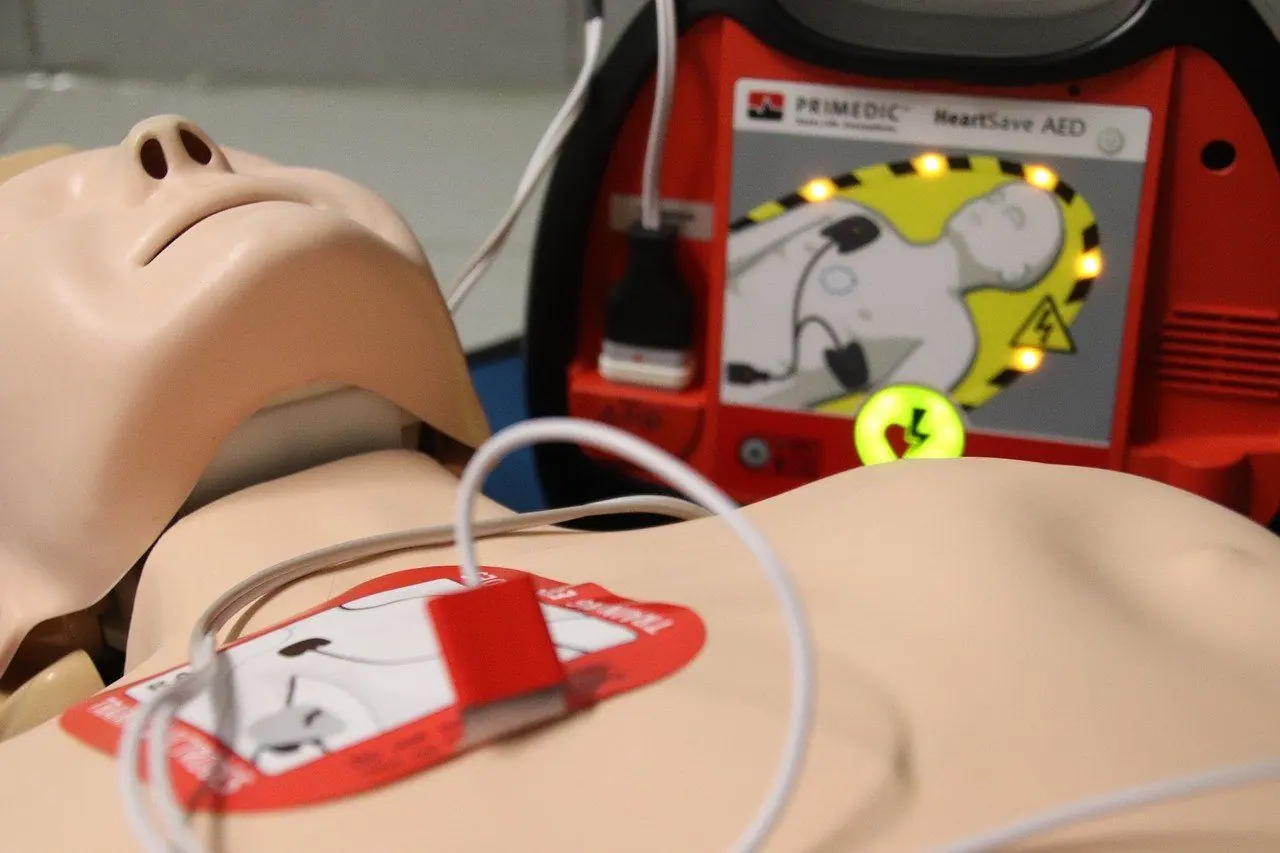
In a workplace where different activities and risks come together, first aid training is a key element in ensuring safety and a fast response in emergencies. At Rescue Group we believe that a well-prepared team can not only meet health and safety requirements, but also save lives and minimise the consequences of injuries or sudden illness. Whether you run an office, a production hall or a construction company, first aid training makes your workplace more resilient and strengthens employees’ trust. Our expert programmes, led by certified instructors, will help you create a safe and responsible working environment where preparedness comes first.
Why first aid training matters for workplace safety
First aid training is not only a legal obligation, but also an essential step in protecting employees’ health. Every employer must make sure its team is able to give basic first aid in the event of an injury, cardiac arrest or other medical incident. This obligation applies to all companies, from small businesses to large industrial complexes. Failing to meet it can lead to fines from the labour inspectorate, but above all it endangers employees’ safety.
According to Czech Red Cross statistics, tens of thousands of workplace injuries occur in the Czech Republic every year, and many could have milder consequences thanks to a fast and correct response. In cardiac arrest, for example, every minute is critical – without immediate cardiopulmonary resuscitation (CPR), the chance of survival falls by 7–10% every minute. First aid training for employees prepares your team for such situations and teaches them to recognise the symptoms. We design training to be practical and focused on real scenarios that match the specific risks of your workplace.
What first aid training covers
Our first aid training is carefully structured to cover all the key aspects needed for an effective response to emergencies. The programme is divided into a theoretical and a practical part, with the emphasis on practical skills. Employees learn basic procedures such as:
- Recognising life-threatening conditions (cardiac arrest, shock, severe allergic reactions).
- Calling the emergency services correctly and communicating with the dispatcher.
- Giving cardiopulmonary resuscitation (CPR) to adults and children.
- Controlling bleeding and treating wounds, including using pressure bandages.
- Stabilising bone and joint injuries until the paramedics arrive.
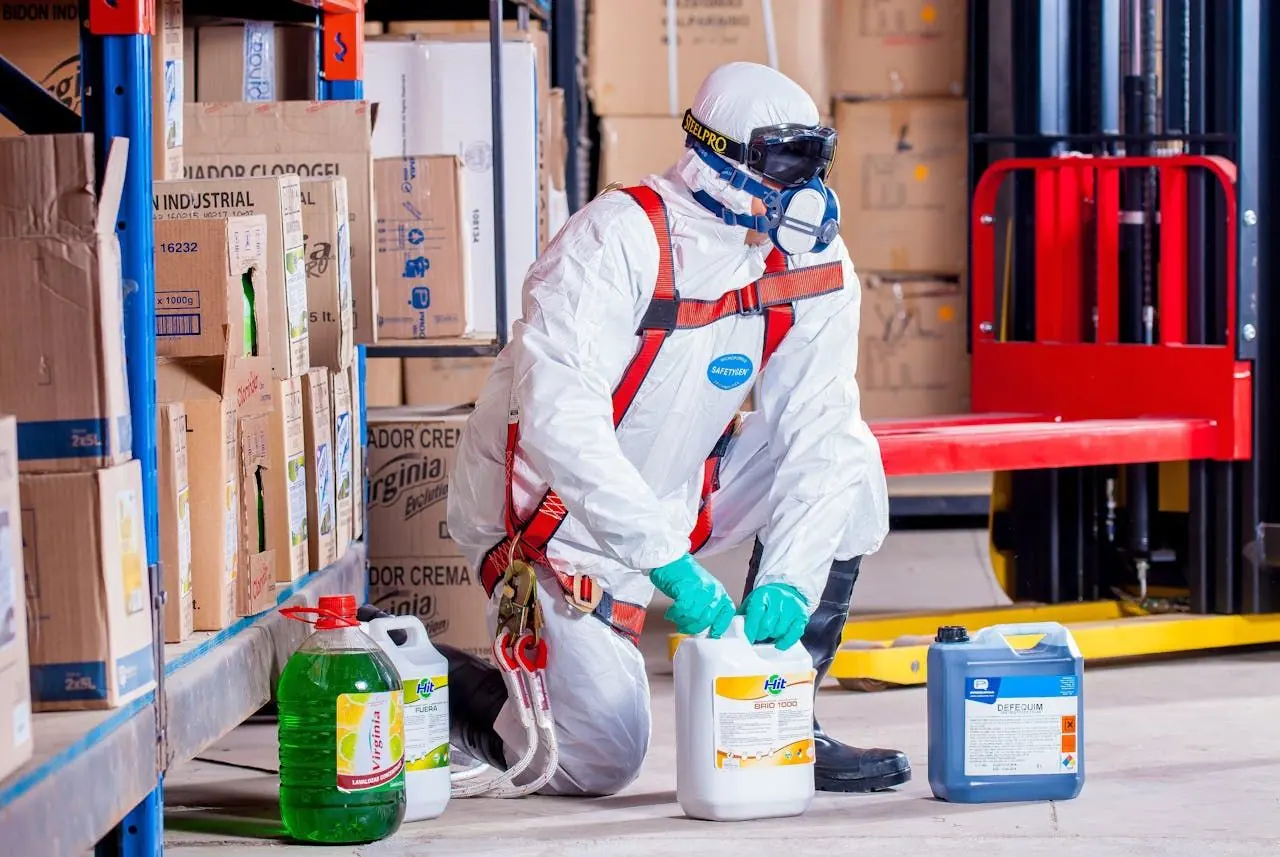
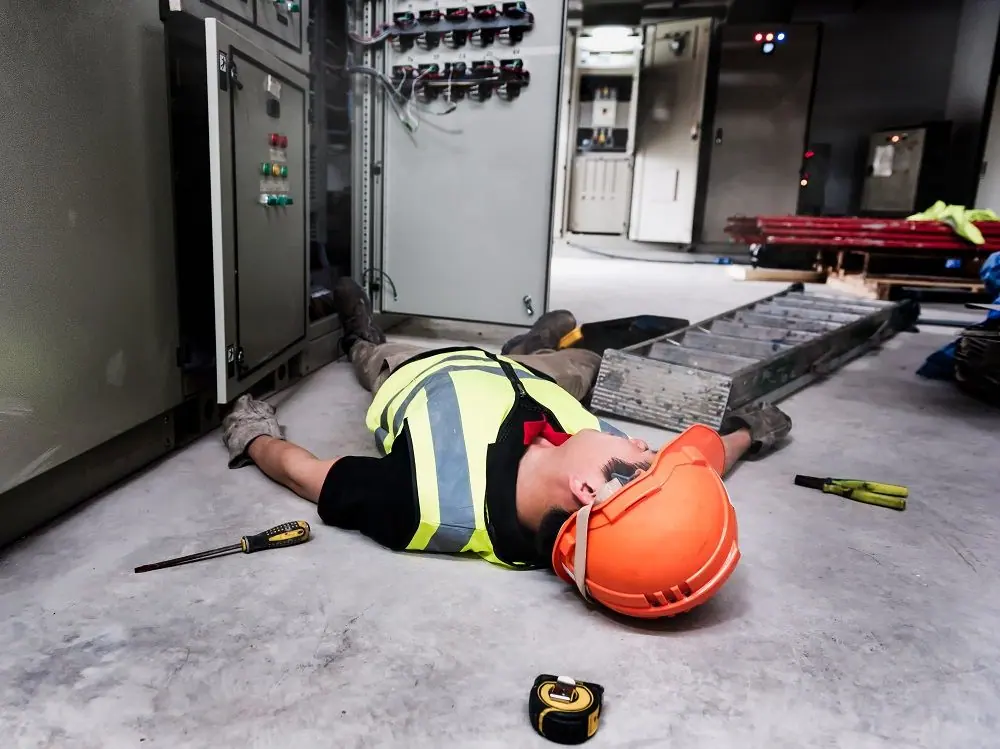
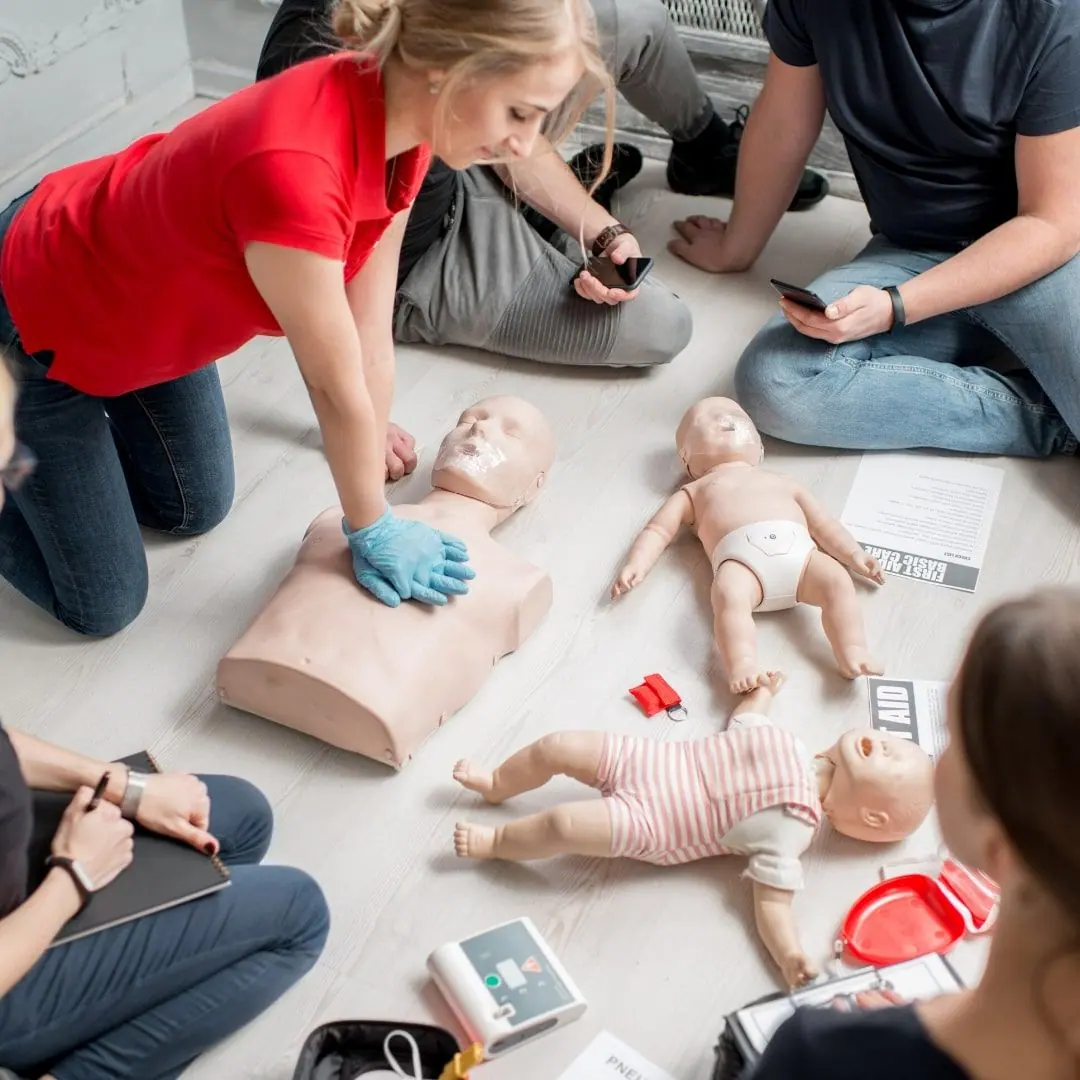
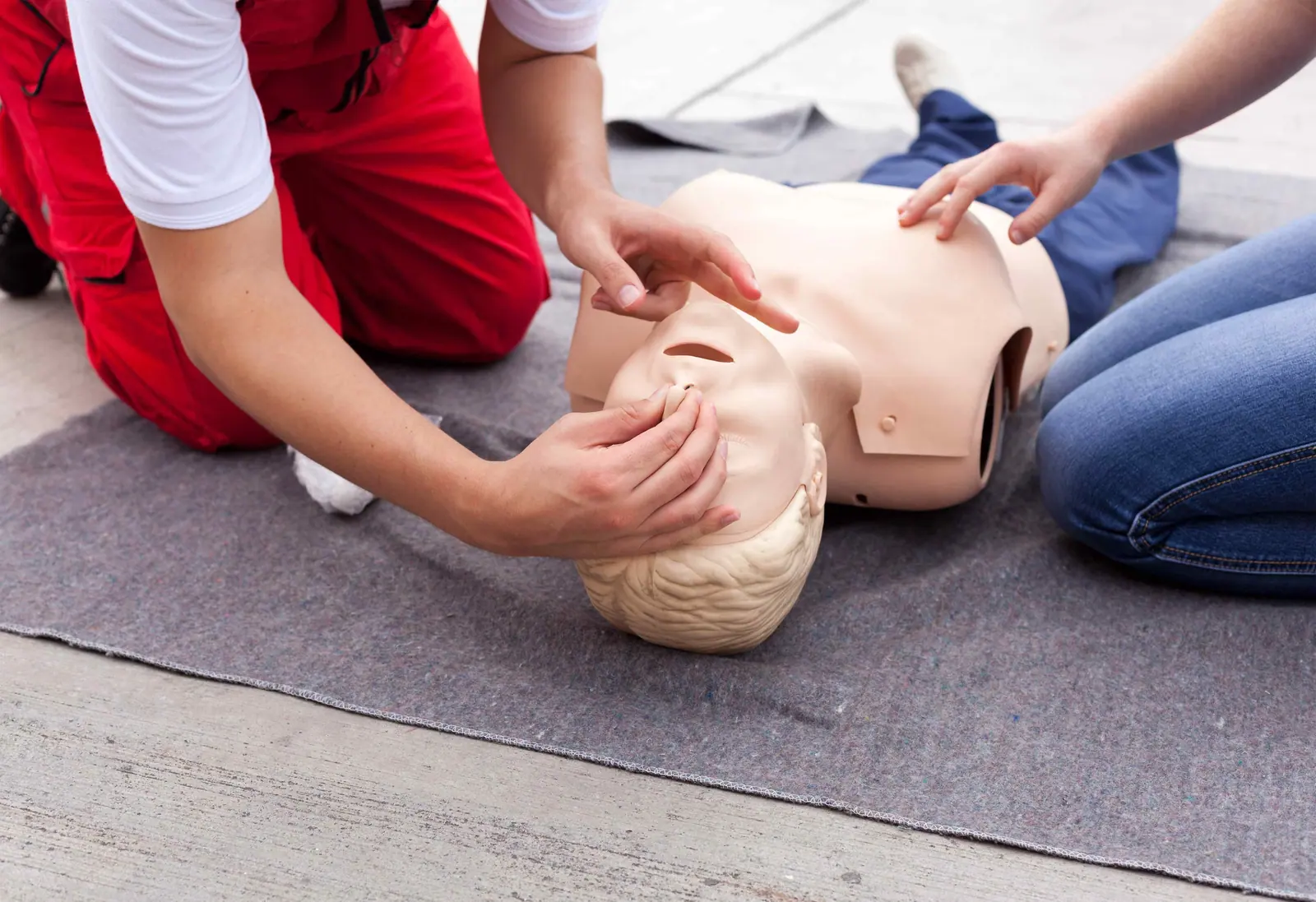
The practical part takes place on mannequins and in simulated scenarios reflecting common workplace situations, such as a fall from height, a burn or an electric shock. The training is tailored to the company’s specific needs – in offices we focus on handling stress reactions and sudden illness, while in production operations we emphasise injuries related to heavy machinery or chemicals.
How first aid training benefits employees
First aid training for employees brings deeper value than just learning rescue techniques – it supports personal development and risk prevention in the workplace. Participants develop the ability to make quick decisions and think critically, which is useful not only in emergencies, but also in everyday work tasks. Practising first aid procedures, for example, teaches employees to analyse situations and adapt to unexpected challenges, making them more flexible and resilient. At Rescue Group we design first aid training to include scenarios specific to your sector, such as dealing with minor injuries in warehouses or responding to someone collapsing in an office. This approach not only strengthens workplace safety, but also helps employees better understand and prevent potential risks, such as dangerous work practices or poorly organised spaces. The result is a proactive approach to injury prevention that reduces the likelihood of accidents and increases the team’s overall efficiency.
Another significant benefit is a stronger company culture and reputation. Employees who complete a first aid course see that their employer cares about their safety, which increases loyalty and trust in the company. This sense of responsibility also carries over into relationships with clients and partners, who appreciate the company’s professionalism and preparedness for emergencies. Regular care for employees’ safety through OHS training, including first aid, strengthens the company’s image and shows its commitment to caring for its team and doing business responsibly. Our programmes are designed so that employees gain long-term skills they can also use outside work, for example during sports or family events. In this way, first aid training not only meets legal requirements, but also creates an environment where employees feel valued and ready to contribute to a safer and more harmonious workplace.
Benefits for the company and health and safety compliance
Investing in first aid training brings companies tangible benefits. According to studies by the European Agency for Safety and Health at Work (EU-OSHA), health and safety training, including first aid, reduces the number of workplace injuries by 20–30% and shortens sick leave. This means lower insurance and compensation costs. Companies that train their employees regularly also have lower staff turnover, because employees appreciate their employer’s interest in their safety.
First aid training also improves the company’s reputation. Clients and partners see a trained team as a sign of professionalism and responsibility. We make sure the training matches the specific risks of your sector – from office buildings to production halls. Our programmes comply with health and safety standards and prepare companies for inspections.
Tailoring the training to your needs
Our programmes are designed to take into account employees’ different roles – from managers to production line workers. For team leaders, for example, we focus on coordinating rescue efforts and communicating during a crisis, while for field workers we emphasise dealing with minor injuries such as grazes or sprains that can occur during physically demanding tasks. At Rescue Group we create first aid training that incorporates elements specific to your sector, whether an office environment where stress reactions need to be handled or logistics companies with risks associated with handling loads. This personalised approach ensures that employees gain skills relevant to their everyday work, increasing their ability to respond quickly and effectively in emergencies.
The optimal training frequency
Getting the frequency of first aid training right is essential for keeping employees able to respond effectively to medical emergencies and thus for strengthening workplace safety. Czech legislation requires employers to provide regular training, with the recommended interval usually around 2 years for standard, low-risk office environments. In higher-risk sectors such as construction, the chemical industry or healthcare, however, it is advisable to shorten this interval to one to two years so that employees remain fully prepared for specific situations, such as dealing with injuries caused by heavy machinery or exposure to hazardous substances. The frequency of training should also be adapted to staff turnover – companies with higher turnover need more frequent training so that new team members quickly gain the necessary knowledge and comply with health and safety requirements. This approach ensures that every employee has the latest procedures and skills needed for a fast response in an emergency.
Another key factor affecting training frequency is the nature of the working environment and how it changes. For example, in operations where work procedures change frequently, such as production lines with new machinery, short supplementary training every six months is needed so that employees can handle the new risks associated with these changes. In environments with a low physical workload, such as administrative offices, training can be scheduled less often, but regular refresher courses every two to three years ensure that employees do not lose key skills, such as responding correctly to sudden health complications. It is also important to take individual needs into account – for example, workers with limited physical fitness may need more frequent training focused on simpler techniques that do not require much physical effort. Our programmes allow flexible scheduling to fit the company’s operational requirements.
Keep your workplace safe
First aid training is more than meeting legal obligations – it is an investment in the safety, health and trust of your team. We offer comprehensive programmes that combine expertise, practical exercises and adaptation to the specific needs of your workplace. With our training, your employees will be ready to handle emergencies calmly and confidently, which not only reduces risks, but also strengthens your company’s reputation as a responsible employer. Workplace safety starts with preparedness – let us help you create an environment where health and safety come first.
Interested in first aid training? Do not hesitate to contact us.