Finding yourself in a situation where someone has suffered an electric shock can be frightening. A fast and correct response can make the difference between life and death. Read our short guide on how to give first aid for an electrical injury and be ready to face emergencies.
Electric shock: dangers and risks
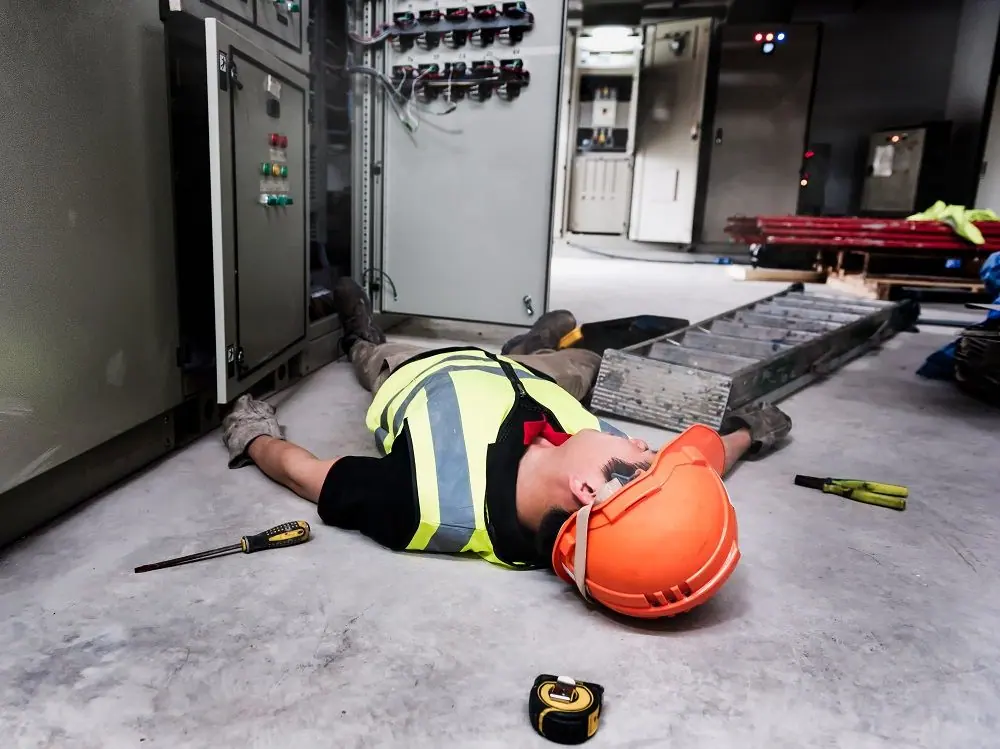
An electric current passing through the human body can cause serious injury or even death. The effects range from minor burns to cardiac arrest or damage to internal organs. The danger increases with the voltage passing through the body and with the length of time the person is exposed to the current.
Keeping yourself safe
When giving first aid, your own safety comes first. If you find yourself in a situation where someone has suffered an electric shock, never touch them until you are sure the electrical circuit has been broken. Switch off the power supply, for example by switching off the circuit breaker, unplugging the plug, or moving the casualty away from the source of the current using a non-conductive object such as a wooden pole or a rubber glove.
What to do, step by step
1. Stay calm and assess the situation
The first step is to stay calm. In a sudden shock it is easy to act impulsively, which can make the situation worse. Taking a moment to assess the situation can prevent further danger. Ask yourself:
- What exactly happened, and why?
- Could there be further danger to the casualty or to you?
- How many people are injured and where are they?
- Who can help, and what tasks can they do?
2. Disconnect the source of the current
Before approaching the casualty, make sure the power source is switched off. If that is not possible, use a non-conductive object (such as a wooden pole) to move the cable away from the casualty. Never use your bare hands or conductive materials.
3. Call the emergency services
Contact the emergency services quickly (112, or 155 for the ambulance service in the Czech Republic) and tell them about the situation. Give the exact location, the number of injured and a description of what happened. If someone else is available, ask them to call the emergency services while you give first aid.
4. Give first aid
If the casualty is conscious:
- Check them for other injuries.
- Keep them calm and monitor their condition.
If the casualty is unconscious but breathing:
- Place them in the recovery position.
- Check their pulse and breathing regularly.
If the casualty is not breathing and has no pulse:
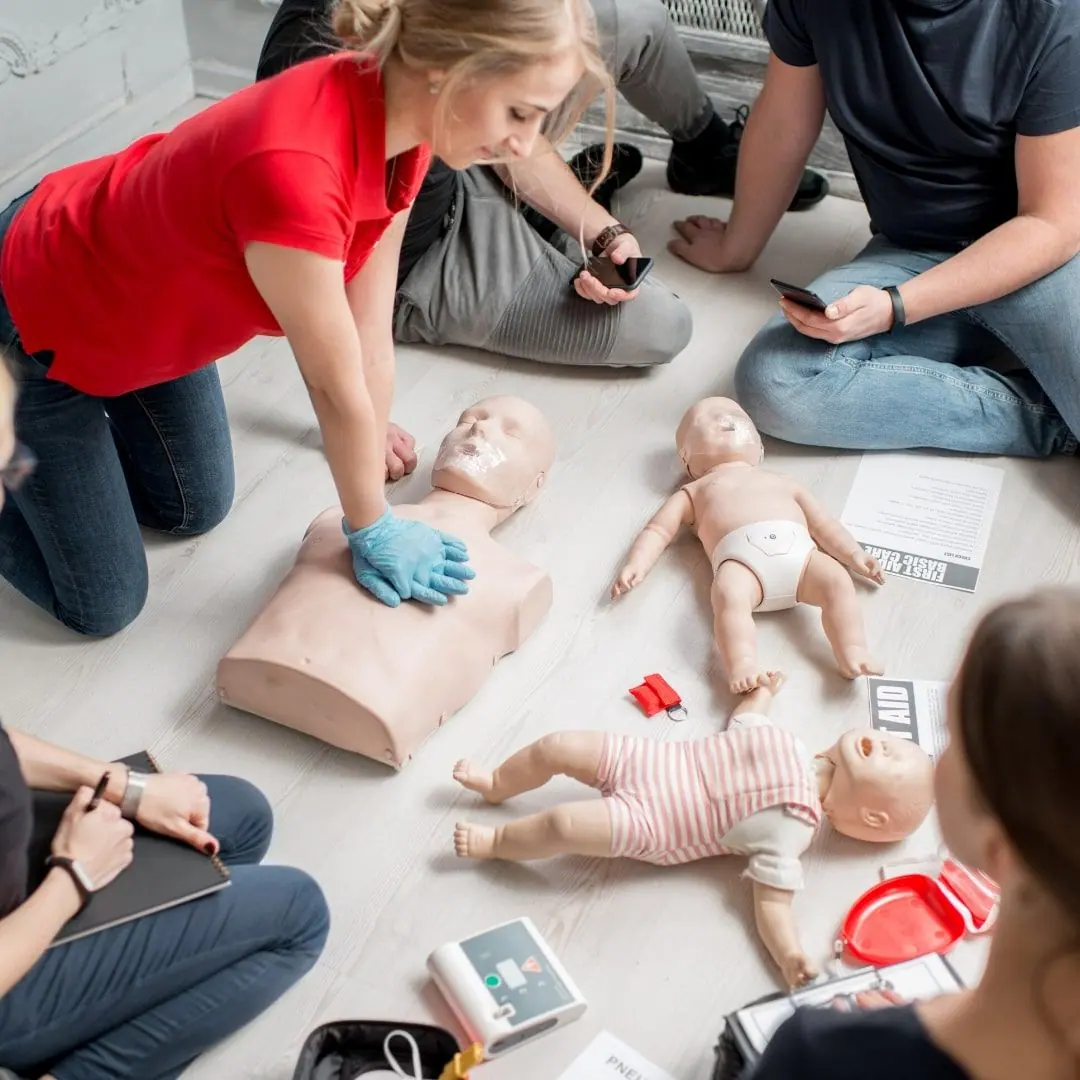
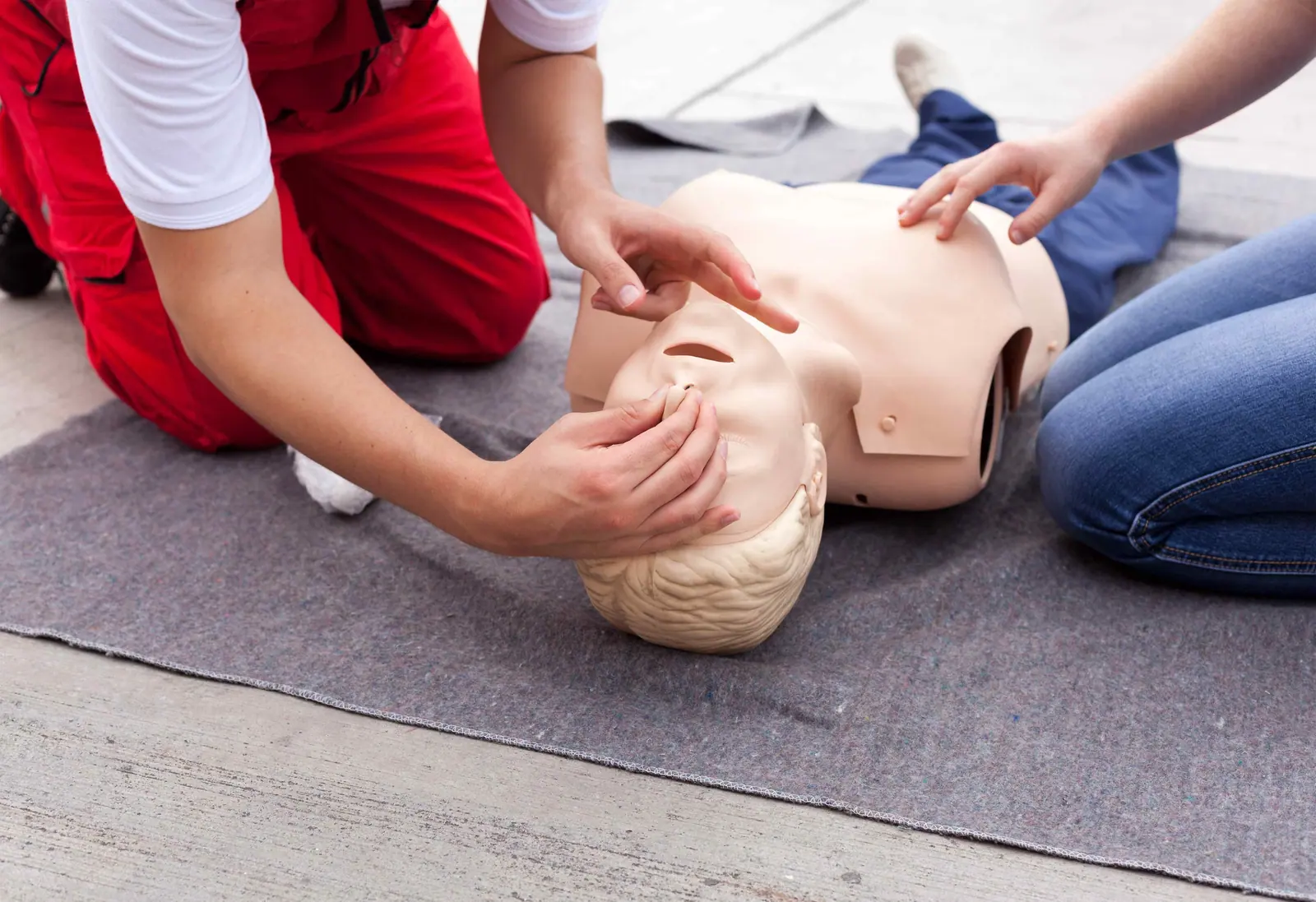
- Start cardiopulmonary resuscitation (CPR) immediately. Lay the casualty on their back on a firm surface, kneel beside them and give 30 chest compressions followed by two rescue breaths. Continue CPR until the emergency services arrive or the casualty’s breathing and circulation are restored.
5. Make the surroundings safe
Make sure no one else approaches the scene who could be put at risk. If the accident is near a road, warn passing vehicles of the danger or arrange for someone to direct traffic.
Tip: we provide top-quality training tailored to the individual needs of our clients.
First aid for burns
Electric current can cause burns where it enters and leaves the body. These burns can sometimes be deep, even though they look like small wounds on the surface. Rinse the affected area with cold water. Do not use ice, as it could damage the tissue. Cover the burns with a clean, sterile dressing or cloth to prevent infection.
Monitoring the casualty
After giving first aid, it is important to keep monitoring the casualty. Keep them calm and warm, let them lie down if possible, and remember that even a seemingly minor electric shock can have serious consequences. Monitoring vital signs such as breathing and heart activity is essential until the emergency services arrive.
Preventing electrical injuries
Prevention is the best way to avoid electrical injuries. The following measures can help minimise the risk:
- Use safety devices: make sure all electrical equipment is properly earthed and fitted with surge protection.
- Have your electrical installation checked regularly: have your electrical installation inspected regularly by professionals to avoid the risk of hidden faults.
- Be careful when working with electricity: use suitable personal protective equipment such as insulated gloves and footwear. Avoid contact with water when working with electrical equipment.
- Teach employees and family: make sure everyone around you knows what to do in the event of an electrical injury and how to switch off the electricity safely.
An electric shock is a dangerous situation that requires a fast and effective response. Correctly given first aid can save a life. The priority is always your own safety: quickly disconnect the source of the current, call the emergency services and give the necessary first aid. At Rescue Group we offer first aid training as part of our comprehensive packages, so that your employees are as prepared as possible for unexpected emergencies.
Our training will prepare you as well as possible for the unexpected.