Choking is a critical situation that requires an immediate response. It can happen anytime and anywhere, whether to an adult, a child or a baby. Knowing the right first aid techniques for choking can be decisive and can save a life. In this article we look at what to do if someone is choking and at proven techniques that can help you handle this situation. The first aid approach differs depending on whether the casualty is a baby, a child or an adult.
Signs of choking
The first step is to recognise that someone is choking. Recognising the signs correctly is essential for saving a life, and a fast response can significantly increase the chance of rescue. Choking occurs when a person’s airway is completely or partially blocked. The universal sign of choking is clutching the throat. Other typical signs include:
- inability to speak or cough,
- silent or high-pitched wheezing when trying to breathe,
- blue skin, lips and nails,
- panic and a frightened expression,
- fainting (although this does not necessarily mean choking).
Always try to assess the situation as well as you can. In adults in particular, choking can be mistaken for another acute condition.
First aid for choking in adults and children over one year
The human body can give itself first aid by coughing.
Steps to clear the airway
Encourage the casualty to cough: if the person can cough, encourage them to keep going. Coughing is the most effective way to remove a foreign object.
Abdominal thrusts (Heimlich manoeuvre): if coughing does not help and the person still cannot breathe, use abdominal thrusts. This is the recommended procedure:
- Stand behind the person and put your arms around their waist.
- Make a fist with one hand and place it above the navel, then put your other hand over your fist.
- Pull sharply inwards and upwards towards the area under the breastbone.
- Repeat the thrusts until the airway is cleared or the person loses consciousness.
For pregnant women and people with obesity, place your hands higher, on the chest, between the breastbone and the navel.
First aid for choking in babies (under one year)
Even the smallest human body can give itself first aid by coughing.
Steps to clear the airway
- Check breathing: lay the baby on its back and check whether the chest rises.
- Five back blows: lay the baby face down along your forearm, supporting its head and neck.
- Give five firm blows between the shoulder blades with the heel of your hand.
- Five chest thrusts: if the back blows do not help, turn the baby onto its back and give five chest thrusts.
- Use two fingers to press the breastbone down about 1.5 inches (4 cm).
Repeating the cycle
Alternate five back blows and five chest thrusts until the airway is cleared or the baby starts breathing or coughing.
If the person loses consciousness
If someone becomes unconscious, regardless of age, lay them on a firm, flat surface and call the emergency services immediately. Use the speakerphone so that your hands are free, and follow the emergency operator’s instructions. The operator will probably guide you through cardiopulmonary resuscitation (CPR).
First aid training
Regular first aid training is key to keeping your skills up to date and being ready for emergencies. Training provides up-to-date information on the latest techniques and procedures that can save a life.
Benefits of regular training
- Up-to-date knowledge: procedures and recommendations can change, so it is important to be aware of the latest changes.
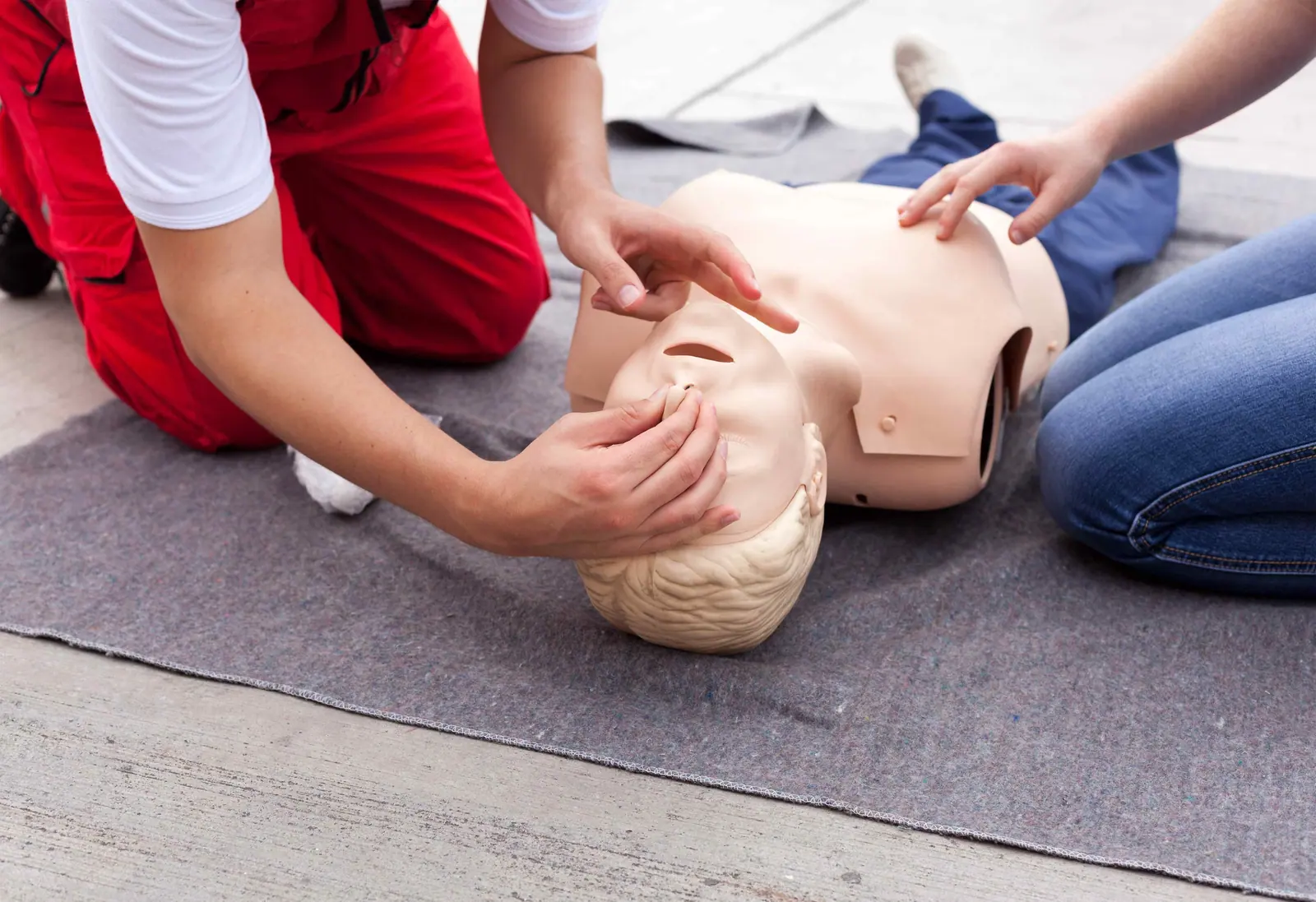
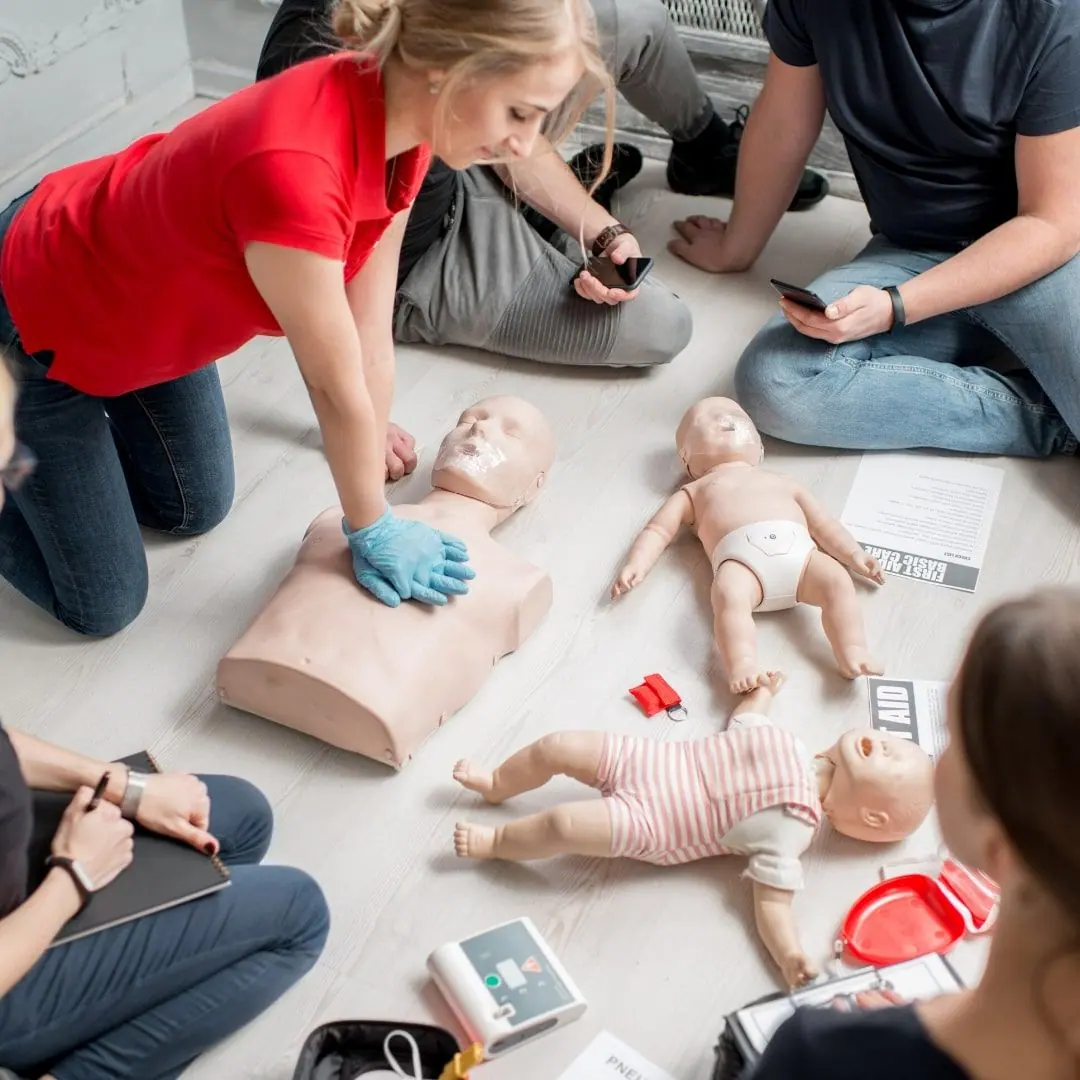
- Practical experience: training gives you the chance to practise your skills on mannequins and in simulated situations.
- More confidence: frequent training gives you confidence and calm in a real emergency.
- Minimising risks: training in occupational health and safety helps identify and minimise risks in the workplace, which increases the overall safety of employees.
Choking is a serious situation that requires an immediate and correct response. Knowing first aid techniques for choking, such as abdominal thrusts, can save a life. Regular training and updated skills are key to being ready for any situation. Every second counts, and the right response can make the difference between life and death. Invest time in first aid training and be ready to save a life.
We provide complete, practically oriented first aid training.